Keeping People Alive when Help is Far Away
Recently, I took an Advanced Wilderness First Aid (WAFA) course with Boreal River Rescue.
Going in - Battling Nerves
I did not have a great sense of exactly what to expect. I knew it would be a 40+ hour intensive course. I knew there would be many simulated situations. Their detailed pre-course checklist had us prepared for a rugged expedition. I didn’t know if I would be cooking over my alcohol stove, or in a kitchen. Like any trip, I worried if I had forgotten something I needed.
I was once trained as a lifeguard. But that was decades ago. I was an avid swimmer, runner, and very active. My body isn’t as young, fit, and strong as it was back then. Am I up to the task? I was nervous, and hoped I would meet the expectations of the course, and not disappoint my fellow students.
I took the Boreal River Rescue shuttle from Ottawa to the Quebec woods on a Friday afternoon. My introduction to the weekend began with Ryan, one of the instructors, who shared stories during the drive. He often teaches ice rescue skills, and travels a lot. Listening to him, I was reminded that for some, “the office" is a frozen lake or river. He was a nice guy, and set a thoughtful, professional tone for what was to come.
What a Stunning Facility!
We arrived at Ciel et Bois, which was one part classroom, and one part house/cottage, in Cantley. The beauty of the facility was a delightful surprise. Tucked into the forest northeast of Ottawa, the house is a masterclass in functional design. For those of us staying on-site, the communal kitchen became our base camp. We’d have dinner together most nights.
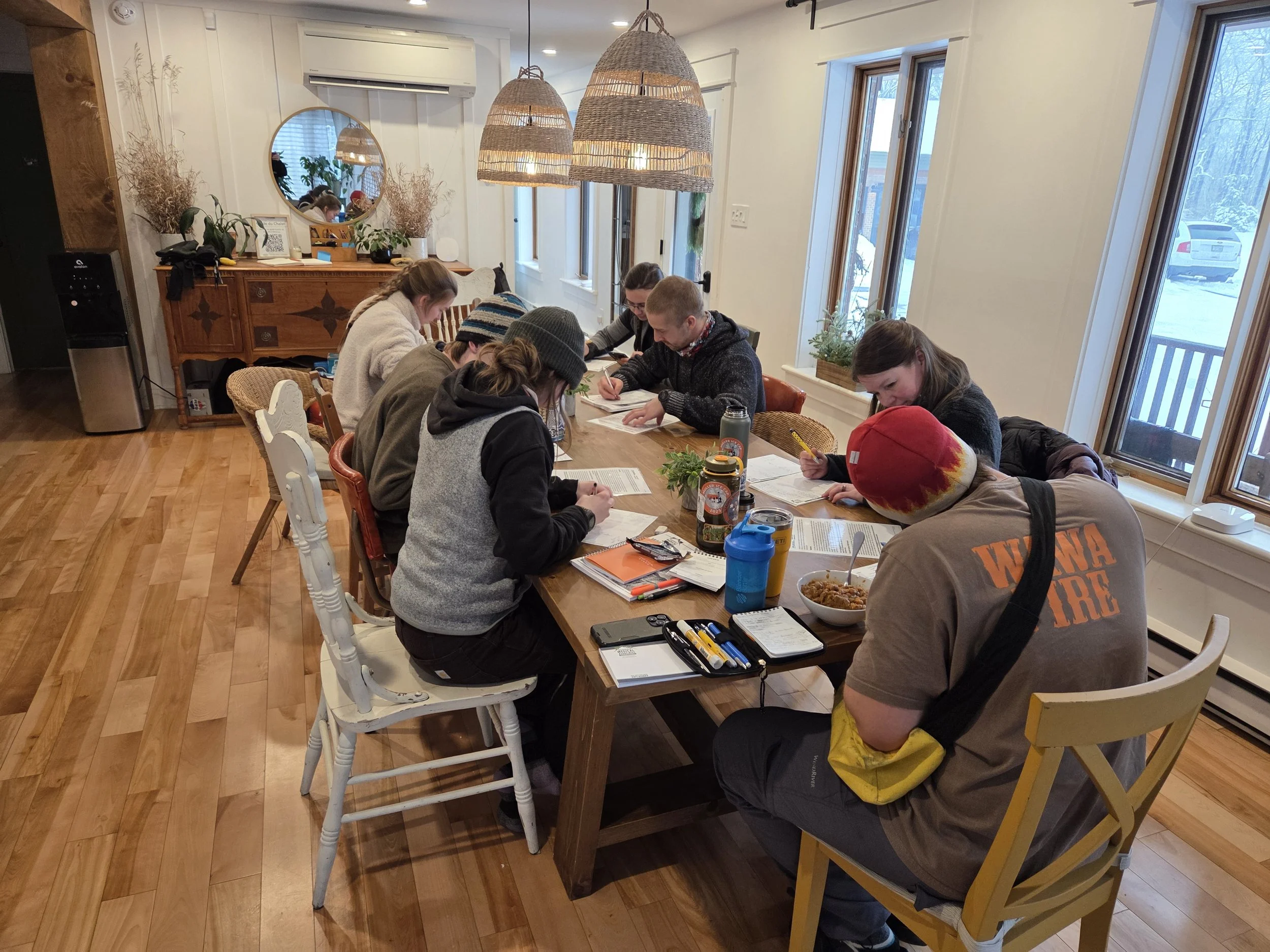
The homework grind on Saturday night
There regularly was a bit of a "kitchen party" vibe with great conversations to decompress after the long days. And the house was large enough that you could always find a corner to retreat into the quiet when your brain needed a rest.
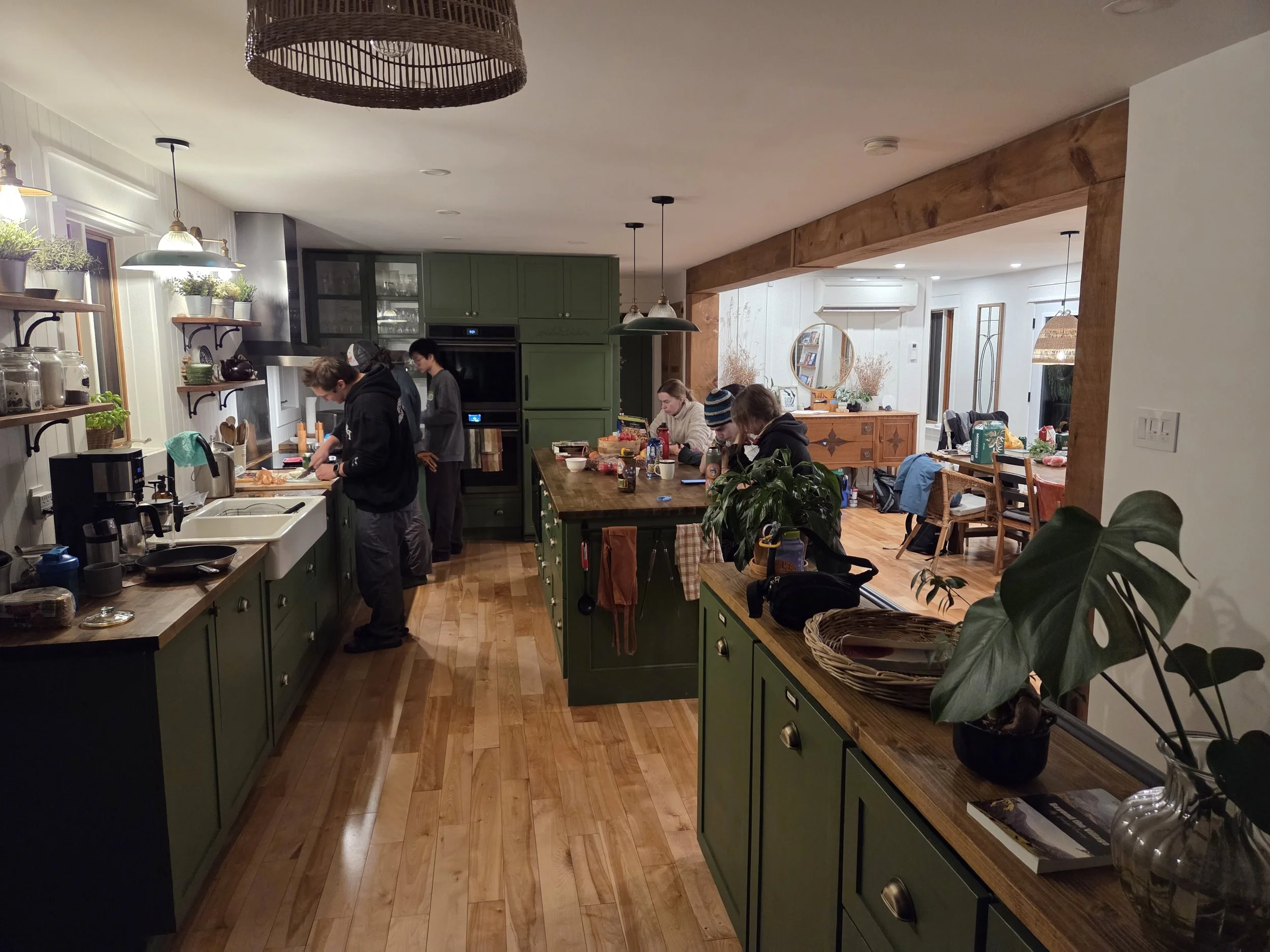
The gorgeous and highly functional kitchen was very useful!
Learning Fast! And well.
Our brains definitely needed a rest from time to time! We learned so much about patient assessment, and treating cuts, burns, broken bones, CPR, choking, hypothermia, hyperthermia, traumatic brain injuries, equipment, materials, and so much more. We also learned about rescue skills such as rolls, lifts, drags, and more to evacuate a patient carefully.
The course ran for four days, starting early, and running into the evening each day. We experienced a full seasonal cycle in the weather. One day was a balmy 15°C, and the next was a biting minus 15°C. We worked outside through rain, bright sun, snow, and high winds. In a way, the weather was our most honest teacher. It’s one thing to practice in a warm classroom; it’s quite another to do it when you out in the elements. In our case, the cold windy days were definitely “character building”!
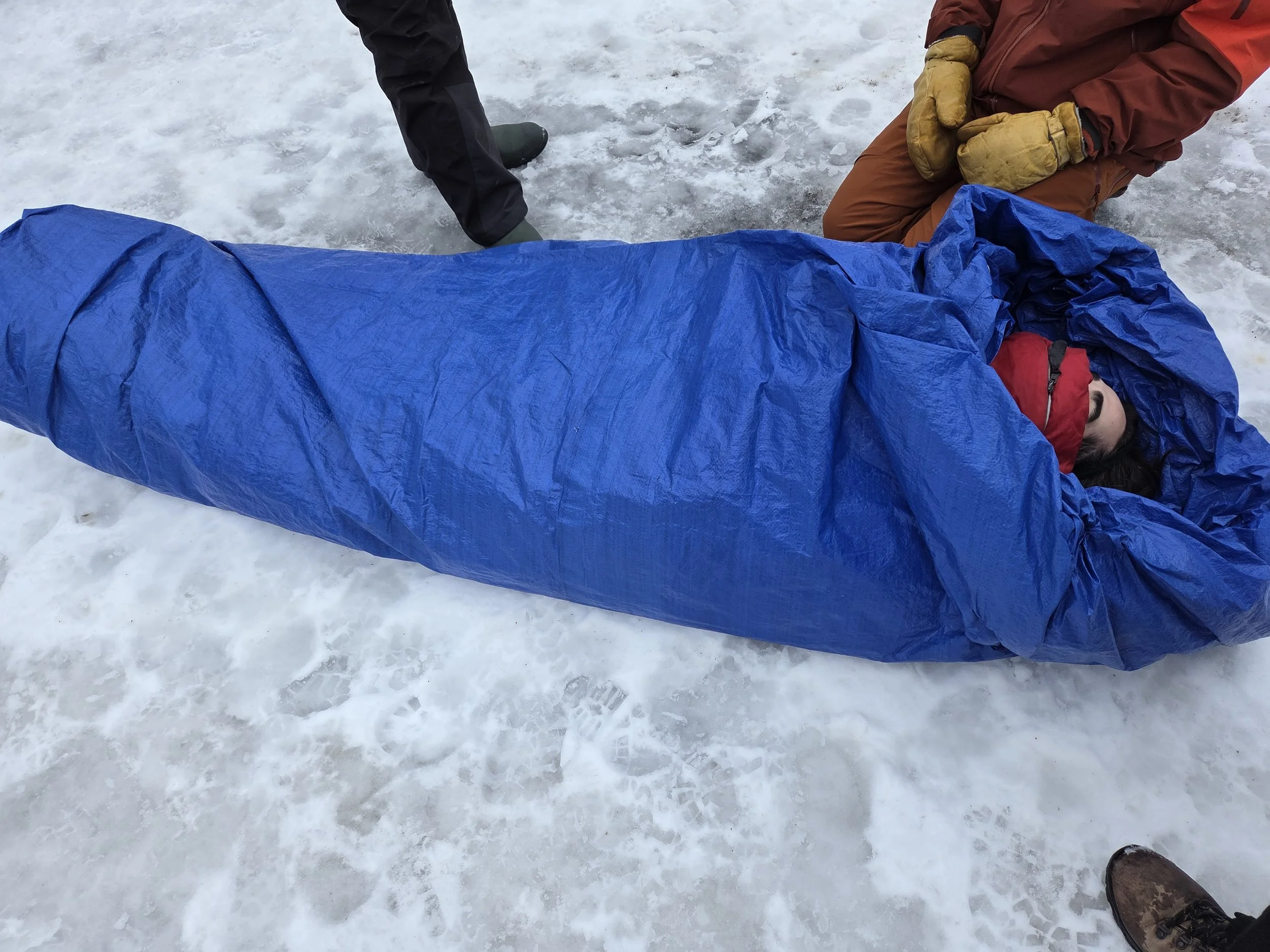
Bundling a patient up to keep them warm and dry in preparation for extraction
Badass Instructors!
Our instructors, Dana and Jill, were remarkable. The kind of stamina required to teach high-stakes material in an engaging way for long hours every day is daunting, and they handled it with a level of professionalism and kindness that was amazing. They put in hours before and after class to prep too. I was so impressed!
Our cohort of students was a beautiful cross-section of the outdoor community. There were 24 of us. There were forestry workers who spend their lives on remote mountainsides, forest firefighters, experienced backcountry trip guides, and researchers heading to the far reaches including the arctic! The ages ranged from those in their twenties to those in their fifties, including people from the Indigenous, LGBTQ+, and POC communities.
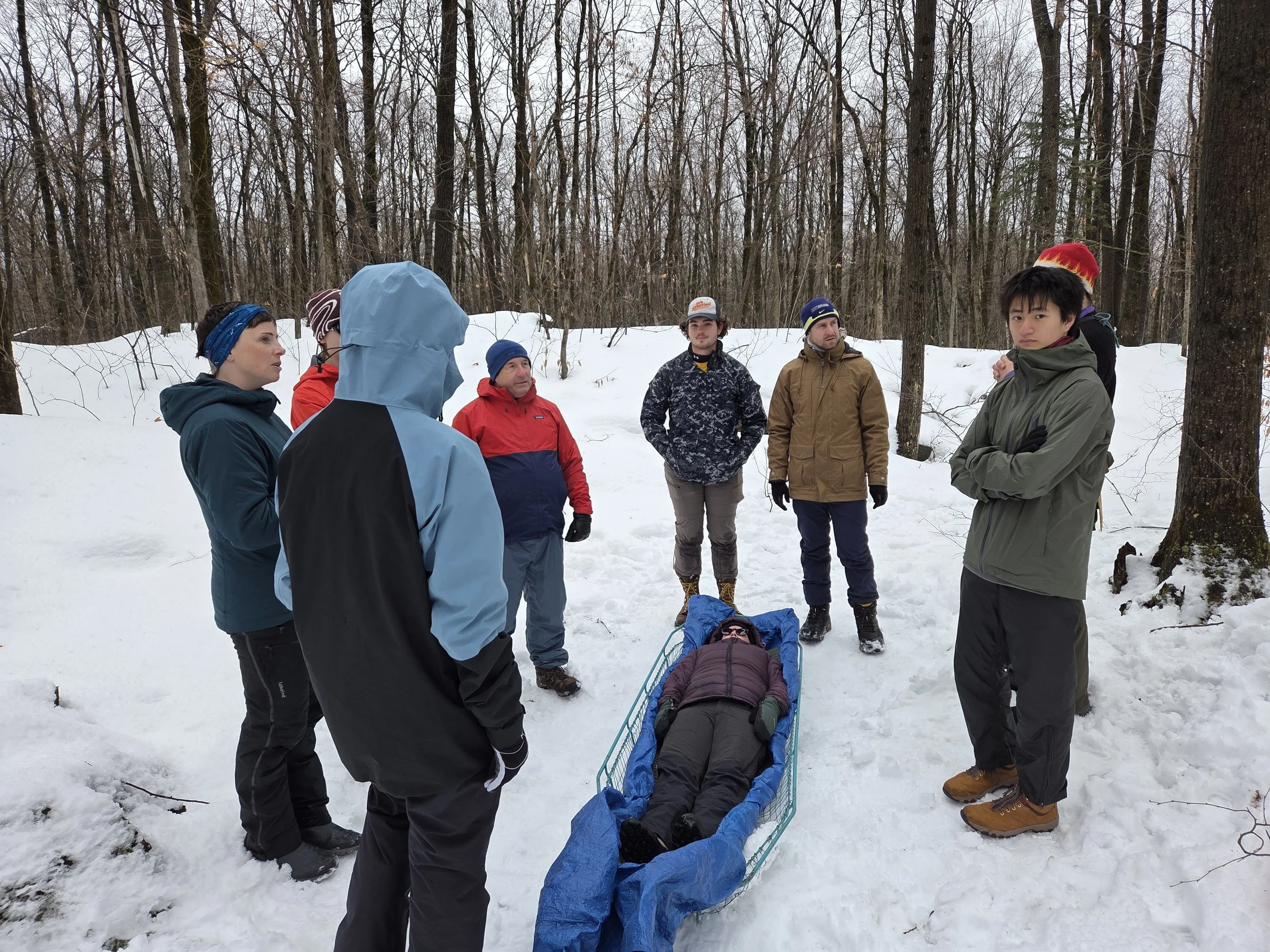
A patient about to be extracted in a litter, after being carefully extracted from being tangled with trees
What struck me most was the maturity, mutual respect, and enthusiasm of the group. Despite ample opportunities for crude jokes, there were very few. Instead, the "fun" came from the collective curiosity. We were so engaged that we would often ask interesting questions that anticipated exactly what Dana and Jill were about to teach us next. There were a few students that delighted me with their enthusiastic acting in our simulations. I came away with a genuine sense of care and fondness for these people I had only just met.
In the City, and in the Wilderness
Coming into this, I knew a Wilderness Advanced First Aid (WAFA) course would involve a long list of skills. But it was far more than the skills.
In the city, first aid is about the "golden hour” stabilizing someone until the ambulance arrives.
In the wilderness, the ambulance isn't coming. We learned to use the Patient Assessment System (PAS) a framework to help you decide what might kill a patient in minutes versus what might harm them over the long term, and crucially in what order to treat those injuries.
We also learned that it’s not over when the helicopter arrives. It’s entirely likely for us to be evacuated with the patient as we continue providing their care if there’s no one with a higher level of medical training available to take over care.
Building these assessment techniques gave me a new kind of confidence, but it also gave me humility. I realized that these skills need to be practiced until they are automatic. Even though at the same time, I never want to have to practice them! The goal of practice is to reduce the cognitive load so that when a crisis hits, you aren't struggling to remember the protocols and techniques. Your training helps you work methodically to stabilize and care for patients.
I won’t kid you, I left the facility feeling exhausted and almost overwhelmed with all that I learned. The accountability for a patient’s care is a heavy responsibility.
It also inspired me deeply, and left me feeling fortunate for all that I was taught.
I’m grateful to Dana and Jill, and Boreal River Rescue, for the experience. And to my fellow students who also made it a positive experience. I feel more prepared for the "what ifs," and a little more connected to the community of people who work in situations where help is many hours, or days away.
If one day I can help someone: a family member, a friend, or a stranger then this is worth every penny to take this course.